Sophia Kingdom married Marc Isambard Brunel
Historical research provides a summary of the life of Sophia and Marc, but there is more of their lives which can be told.
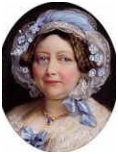
While working there as a governess she met Marc Isambard Brunel (1769-1849) at Rouen in the early 1790s. In 1793, Brunel had to flee the revolution, going to the United States, but Sophia remained in Rouen. During the Reign of Terror, she was arrested as an English spy, and daily expected to be executed. She was only saved by the fall of Robespierre in June 1794. In April 1795 Sophia was able to leave France and travel to London; Brunel remained in the United States for six years, sailing for England in February 1799. He immediately searched for and found Sophia in London. They married on 1 November 1799.
He arrived in New York in 1796, according to New York Historical records.
In 1799, he came to England with a process, extensively employing machine-tools, for making ship's-blocks; the Navy took it up, and hosts of visitors, from Sir Walter Scott downwards, came to see and admire the process. After an excursion into saw-mills he devised a system for the whole-sale manufacture of soldiers' boots. Waterloo was fought and won; soldiers' feet were fewer; eighty thousand pairs were left on his hands; and he sank deeper and deeper into a quagmire of debt. But, after various liaisons with tugs, cotton, nails, tinfoil, printing, and swing-bridges, he ultimately achieved public recognition, a knighthood and the first Thames .
With Sarah's family heavily involved in the Navy, and no doubt he was able to make a favourable impression.
He later was sent to Debtors Prison, according to a book by his granddaughter.
Their children were
6.1 Emma Joan Brunel 1802 1883 m Rev George Harrison
6.2 Sophia Macnemara Brunel 1802 1878 m Sir Benjamin Hawes
6.3 Isambard Kingdom Brunel 1806 1859 m Mary Elizabeth Horsley
6.4 Harriet Louisa Brunell 1814 1815
Liverpool Mercury 5th July 1816
A new steam vessel named the Regent, of 115 tons,, was tried on Saturday morning on the River. She went from Blackfriars Bridge to Battersea Bridge in thirty minutes, and back through London Bridge in fifty two minutes. A great desideratum is we understand, obtained in the construction of the mechanical apparatus by a considerable reduction in the weight. The steam engine of a twenty four horse power, the paddle wheels, and the machinery necessary to give and convey the movement weights only five tons. - This vessel is executed under the direction of Mr Brunel, of Chelsea, by Mr Maudslay; and it was decided by the experiment that she was the best going vessel on the river.
Morning Chronicle
Edinburgh Evening Courant 16 January 1864 wrote a review of a book:
The Youth of Brunel Industrial Biography Iron Workers and Tool Makers by Samuel Smiles author of "Lives of the Engineers &c" London J. Murray
"His father was a small farmer and postmaster in Hacqueville, in Normandy, where he was born in 1769. He was early intended for a priest, and educated accordingly. But he was much fonder of the carpenter's shop than of the school; and coaxing, entreaty, and punishment alike failed in making a hopeful scholar of him. He drew faces and plans until his father was almost in despair. Sent to school at Rouen, his chief pleasure was in watching the ships along the quays; and one day his curiosity was excited by the sight of some light iron castings just landed. What were they? How had they been made" Where did they come from? His eager inquiries were soon answered. They were parts of an engine intended for the great Paris waterworks; the engine was to pump water by the power of steam; and the castings had been made in England and had just landed from an English ship. "England"; exclaimed the boy. "ah! when I am a man I will go see the country where such grand machines are made!"
On one occasion, seeing a new tool in a cutler's window, he coveted it so much that he pawned his hat to possess it. This was not the right road to priesthood; and his father soon saw that it was of no use urging him further; but the boy's instinct proved truer than the father's judgment. It was eventually determined that he should qualify himself to enter the royal navy, and at seventeen he was nominated to serve in a corvette as volonaire d'honneur. His ship was paid off in 1792, and he was at Paris during the trial of the King. With the incautiousness of youth, he openly avowed his royalist opinions in the cafe which he frequented.
On the very day that Louis was condemned to death, Brunel had an angry altercation with some ultra-republicans, after which he called to his dog, "Viens,citoyen!" Scowling looks were turned upon him, and he deemed it expedient to take the first opportunity of escaping from the house, which he did by a back door, and made the best of his way to Hacqueville. From thence he went to Rouen, and succeeded in finding a passage on board an American ship, in which he sailed for New York, having first pledged his affections to an English girl, Sophia Kingdom, whom he had accidently met at the house of Mr Carpentier, the American Consul at Rouen.
Arrived in America, he succeeded in finding employment as assistant surveyor of a tract of land along the Black River, near Lake Ontario. In the intervals of his labours he made occasional visits to New York, and it was there that the first idea of his block machinery occurred to him. He carried his idea back with them into the woods, where it often mingled with his thoughts of Sophia Kingdom, by this time safe in England, after passing through the horrors of a French prison.
"My first thought of the block machinery," he once said, "was at a dinner party at Major General Hamilton's in New York, my second under an American tree, when, one day, I was carving letters on its back, the turn of one of them reminded me of it, and I thought, Ah, my block! so it must be. And what do you think were the letters I was cutting? Of course none other than S.K.."
Brunel subsequently obtained some employment as an architect in New York and promulgated various plans for improving the navigation of the principal rivers. Among the designs of which were carried out, was that of the Park Theatre* at New York, and common foundry, in which he introduced improvements in casting and boring big guns.
But being badly paid for his work, and a powerful attraction drawing him constantly towards England, he determined to take final leave of America, which he did in 1799, and landed at Falmouth in the following March. There he again met Miss Kingdom, who had remained faithful to him during his six long years of exile, and the pair were shortly after united for life."
By Isambard Brunel of Lincoln's Inn 1870 Longman Green and Co London Chancellor of the Dioceses of Ely
He served in the West Indies for 6 years 1786 - 1792 with the French Navy and left New York 1793
He and Sarah were married at St Andrew's Holborn 1/11/1799
He will forever, be known as the man who built the Thames Tunnel.
An article on the Thames Tunnel in "The Illustrated London News" of April 1, 1843, says" "The ceremony of throwing open to the public was performed on Saturday last. At the Rotherhithe shaft, two marquees were erected, one for the directors and the proprietors, with their friends, the other for visitors generally; flags were hoisted, bells were rung, and the entire scene was a demonstration of triumph. At four o'clock a signal-gun was fired, and the procession started from the directors' marquee, down the staircase.
The route taken was along the western archway of the Tunnel, and on arriving at the shaft at Wapping, the procession ascended and crossed the landing, and then returned by the eastern archway to Rotherhithe. Sir I. Brunel, in his passage through the Tunnel, was cheered with heartfelt enthusiasm, and courteously acknowledged the compliment. In the marquee or pavilion was subsequently held a kind of levee, at which Sir. I. Brunel received the congratulations of the company."

After this grandiose preamble, the ceremony of opening the tunnel, with flags flying and church bells rings, is described and illustrated by wood-cuts showing a gay drum and fife band preceding the little old Frenchmen in his gaiters and tightly buttoned redingote, followed by the directors, the Lord Mayor and a long file of distinguished visitors. We see his ovation on emerging from the tunnel and his levee for receiving while Sophia, in tippet and plumed poke bonnet, stands beside him and his daughters, Sophia and Emma, also in tippets and beflowered bonnets, look on shyly from a little distance.
In the
evening 100 persons sat down to a banquet at the London Tavern and Marc
Isambard, with a full heart, thanked Providence for his success and the Duke of
Wellington for his powerful and disinterested aid."

That last
sentence sounds like the eighteenth century; but, of course, Marc Isambard,
though he lived till eighty, was really an eighteenth-century man.


His
portrait was painted in 1812 by James Northcote, who painted many portraits for
the Mudge and Kingdom families.
Sir Marc Isambard Brunel by James Northcote
oil on canvas, 1812-1813 49 1/4 in. x
39 in. (1251 mm x 991 mm)
Given by the sitter's grandson, Henry Marc Brunel, 1895 Primary Collection NPG 978
Given by the sitter's grandson, Henry Marc Brunel, 1895 Primary Collection NPG 978
James Northcote (1746-1831), Painter; pupil and
biographer of Sir Joshua Reynolds. Artist associated with 103 portraits, Sitter
associated with 23 portraits.
James Northcote, no doubt has a
relationship within the Kingdom/Mudge lineage.
Jane Kingdom 1716 m William
Northcote. Jane Kingdom was the aunt of
Ann Kingdom.
From his will James Northcote left a large sum
to Rev Joseph Hawker and his wife. Rev
Joseph Hawker was born Jacob Hawker, who was the son of Ann Rains. Her father was Stephen Rains who married Ann
Kingdom.
The links to Northcote, align
with the birth records showing they were Methodist.

National Portrait Gallery Sir Marc Isambard Brunel by Samuel Drummond oil on canvas, circa 1835 50 in. x 40 in. (1270 mm x 1016 mm) Purchased, 1859 NPG 89

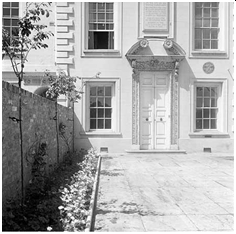
Cheyne
Walk seen from The Thames in the 1890's
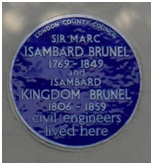
 English: Blue plaque erected in 1954 by
London County Council at 98 Cheyne Walk, Chelsea, London SW10 0DQ, Royal
Borough of Kensington and Chelsea
English: Blue plaque erected in 1954 by
London County Council at 98 Cheyne Walk, Chelsea, London SW10 0DQ, Royal
Borough of Kensington and ChelseaYou can download a free digitised book, the Life of Brunnel

Robert Stephen Hawker (1803–1875) was an Anglican priest, poet, antiquarian of Cornwall and reputed eccentric. He is best known as the writer of "The Song of the Western Men" with its chorus line of "And shall Trelawny die? / Here's twenty thousand Cornish men / will know the reason why!", which he published anonymously in 1825. His name became known after Charles Dickens acknowledged his authorship of "The Song of the Western Men" in the serial magazine Household Words.
Hawker was born in the clergy house of Charles Church, Plymouth, on 3 December 1803, He was the eldest of nine children and grandson of Robert Hawker, vicar of Charles Church. When he was about ten years old his father, Jacob Stephen Hawker, took Holy Orders and left Plymouth to become curate of Altarnun, leaving him in the care of his grandparents.
By this time Hawker was already reading and writing poetry. He was educated at Liskeard Grammar School and Cheltenham Grammar School (now Pate's Grammar School). As an undergraduate, aged 19, he married Charlotte Eliza I'ans, aged 41. The couple spent their honeymoon at Tintagel in 1823, a place that kindled his lifelong fascination with Arthurian legend and later inspired him to write The Quest of the Sangraal. This marriage, along with a legacy, helped to finance his studies at Pembroke College, Oxford. He graduated in 1827 and won the 1827 Newdigate Prize for poetry.
Hawker was ordained in 1831, becoming curate at North Tamerton and then, in 1834, vicar of the church at Morwenstow, where he remained throughout his life. When he arrived at Morwenstow there had not been a vicar in residence for over a century. Smugglers and wreckers were apparently numerous in the area. A contemporary report says the Morwenstow wreckers "allowed a fainting brother to perish in the sea ... without extending a hand of safety."
Hawker's first wife, Charlotte, died in 1863 and the following year, aged 60, he married Pauline Kuczynski, aged 20. They had three daughters, Morwenna Pauline Hawker, Rosalind Hawker and Juliot Hawker. Robert Hawker died on 15 August 1875, having become a Roman Catholic on his deathbed. He was buried in Plymouth's Ford Park Cemetery. His funeral was noteworthy because the mourners wore purple instead of the traditional black.
Mr Kingdon acquired this estate by purchase in 1872, and afterwards considerably improved it and added a new wing to the mansion. The Manor of Ednaston went with the estate. The family of Kingdon was seated at Trehunsey, in Cornwall, for many generations before 1400.
• Roger Kingdon died at Trehunsey, 1471.
• William Kingdon, his son, was elected M.P. for Liskeard, 1452.
• Edward Kingdon, son of the above, also represented the same place, 1467.
• John Kingdon, of Trehunsey, settled at East Leigh in 1563, from which time the pedigree remains unbroken. The elder branch still reside at East Leigh.
• Mr Kingdon succeeded his father in the family residence of Stamford Hill, Cornwall, which place was the scene of a battle in which the Cornish royalists, under Sir Bevil Grenville, gained a signal victory over the rebel army under the Earl of Stamford, May 16th 1643.
An ancestor of Mr Kingdon’s fought here on the royalist side. Several mementoes of this battle are still preserved by the family.
Besides his Derbyshire property, Mr Kingdon became possessed of Stamford Hill and estates in the parishes of Ponghill, Stratton, Launcells and Poundstock, in Cornwall, and others in Devon. The family originally became connected with Derbyshire through marriage with the Gilberts, of Youlgrave Hall.

*The Park Theatre, originally known as the New Theatre, was a playhouse in New York City, located at 21, 23, and 25 Park Row, about 200 feet (61 m) east of Ann Street and backing Theatre Alley. The location, at the north end of the city, overlooked the park that would soon house City Hall. French architect Marc Isambard Brunel collaborated with fellow émigré Joseph-François Mangin and his brother Charles on the design of the building in the 1790s. Construction costs mounted to precipitous levels, and changes were made in the design; the resulting theatre had a rather plain exterior. The doors opened in January 1798.
In the late 18th century, New York's only playhouse was the decaying and increasingly low-brow John Street Theatre. Tired of attending such an establishment, a group of wealthy New Yorkers began planning the construction of a new playhouse in 1795. Investors bought 113 shares at $375 each to cover the estimated $42,375 cost.
To plan the structure, the owners hired celebrated architect Marc Isambard Brunel, a Frenchman who had fled to New York to avoid the Reign of Terror and was currently the city's engineer. Part way through construction, however, the project ran out of money. The owners sold more shares for what would eventually mount to a construction cost of more than $130,000. As a cost-saving measure, Brunel's exterior design for the building was not implemented. The resulting three-story structure measured 80 feet (24 m) wide by 165 feet (50 m) deep and was made of plain dressed stone. The overall effect was an air of austerity. The interiors, on the other hand, were quite lavish. The building followed the traditional European style of placing a gallery over three tiers of boxes, which overlooked the U-shaped pit
Brunel arrived in New York on 6 September 1793, and he subsequently travelled to Philadelphia and Albany. He got involved in a scheme to link the Hudson River by canal with Lake Champlain, and also submitted a design for the new Capitol building to be built in Washington. The judges were very impressed with the design, but it was not selected.
In 1796, after taking American citizenship, Brunel was appointed Chief Engineer of the city of New York. He designed various houses, docks, commercial buildings, an arsenal, and a cannon factory. No official records exist of the projects that he carried out in New York, as it seems likely that the documents were destroyed in the New York Draft Riots of 1863.....
Brunel several times became involved in unprofitable projects. As a consequence, by the beginning of 1821 he was deep in debt, and in May of that year he was tried and committed to the King's Bench Prison, a debtors prison in Southwark. Prisoners in a debtors prison were allowed to have their family with them, and Sophia accompanied him. Brunel spent 88 days incarcerated.
As time passed with no prospect of gaining release, Brunel began to correspond with Alexander I of Russia about the possibility of moving with his family to St Petersburg to work for the Tsar. As soon as it was learnt that Britain was likely to lose such an eminent engineer as Brunel, influential figures, such as the Duke of Wellington, began to press for government intervention. The government granted £5,000 to clear Brunel's debts on condition that he abandon any plans to go to Russia. As a result, Brunel was released from prison in August


Marc Brunel and his Plans to construct the White House

Famed engineer Marc Isambard Brunel lost a bid to design the US Capitol Building in Washington, DC, 224 years ago.
Now, his design has been revealed after being tucked away in a large album in the Brunel family archive for more than 150 years.
The drawing is tipped to sell at the auction in London on Wednesday for $19,600 (£15,000).
Brunel, who went on to design the Thames Tunnel in London and was the father of Isambard Kingdom Brunel, submitted his plans to a committee which was appointed to choose the design for the Capitol Hill building in 1793.
His design was submitted shortly after he arrived in the United States as a Normandy refugee of the French Revolution.
http://www.dailymail.co.uk/news/article-5080879/Brunel-s-Capitol-design-sell-London-auction.html
The interesting note regarding this information, is that his children never mentioned it in their books.
Isambard Kingdom Brunel and the Railways - Mickleton Tunnel
Isambard Brunel was appointed Chief Engineer and Planner. The original plan was to run across the meadows by Berrington Mill and enter Campden close to the Volunteer Inn at the beginning of Watery Lane (now Park Road). The plan also included a branch line from Campden to Stratford-upon-Avon. This plan was defeated by the opposition of the Earl of Gainsborough and so the start of the branch line was changed to Honeybourne, and the line changed to its present course. This meant the construction of a mile long tunnel near Mickleton, which took five years to complete. The contract to construct the tunnel was given to Ackroyds, and they put a man named Robert Marchant in charge.
Slow progress building the tunnel
The work started in the summer of 1846, but Brunel was not pleased at the slow progress and Marchant complained of the difficulties caused by water and clay. At various times work was suspended, and in July 1848, the Railway Board ordered Brunel to arrange with the contractors to give up the work and leave the site. Lack of capital and controversy over whether to have broad or narrow gauge also caused delay. Eventually more capital was raised and work began again in 1851, but in July of that year Brunel was ordered to take over the project himself, and further payments to the contractors were refused. On the threat of being turned out, the contractor’s man, Marchant, who was owed more than £30,000 by the Company, barricaded the works and defied the railway company and Brunel himself. The railway company’s agent, a Mr Varden, came over from Banbury with a body of men, determined to take possession. Marchant, hearing of this, persuaded two local magistrates to be present with a number of constables armed with cutlasses.
Trouble at the Tunnel – the Riot Act read
After talks between Brunel and Marchant, with threats of fighting, the magistrates read out the Riot Act. Brunel then retired, putting off any action until the following day. Early next morning the magistrates were on the scene again with the constables. Brunel arrived with some of his men, and Marchant faced him with a larger body of navvies armed with picks and shovels. The magistrates again read the Riot Act and the men dispersed. Brunel pretended to accept the situation, but secretly sent messages to recall his workmen from all along the line. The magistrates, in the meantime, having considered the matter closed, retired from the scene. However, James Ashwin, the magistrate from Bretforton, found out what Brunel had done, and realising there might be serious trouble, set out at once on his horse, arriving at the works at about three o’clock in the morning. On the way he met a body of men who had been travelling all night on Brunel’s order. They were not quite sure where the tunnel was, so Ashwin directed them the wrong way. On arriving at the works, Ashwin found Brunel with his officers and managers waiting for his men to arrive. Ashwin was able to convince Brunel that he must side with him in keeping the law, and it is said that he swore Brunel in as a special constable on the spot. After long discussion, Brunel’s men started to come in from all directions; a total of about 3,000 men. Fighting broke out between Brunel’s men and Marchant’s men. Mr Ashwin, aided by Brunel, eventually managed to restore order. There were no fatalities, though several arms and legs were broken.
Completion of the line
Brunel and Marchant both agreed to go to arbitration. This resulted in the railway company paying off the contractors and completing the work themselves. Mr Ashwin, who had acted with great courage and patience, was sent a letter of thanks from the Bench at Gloucester for the part he had played in the affair. In March 1852 Brunel resigned after arguing with the Great Western over which gauge to use and other matters.
In the spring of that year serious floods damaged the tunnel, but this was overcome, and it was finally completed in the Spring of 1853. The line was first operated by an independent contractor who supplied the locomotives and rolling stock, then by the London and North Western, and finally they sold it to the Great Western, who operated it until the railways were nationalised in 1946.
The effects on the town
As far as Campden was concerned, the coming of the railway and building of the tunnel caused great upheaval. The population of the town was increased by over 300, mostly navvies. Some lived in lodgings, some in a row of cottages specially built for them at Paul’s Pike, and some in the huts built on the site. Of course, other villages in the district suffered similar troubles, but it wasn’t all gloom and doom. Public houses, shops and bookmakers benefited considerably. Unfortunately Dover’s Games became more rowdy as the attendances grew larger, and the Games were stopped.
Campden shopkeepers and the tunnel contractors were always at loggerheads over the prices the shopkeepers were charging. The tunnel workers said they were paying 10 ½d for a four pound loaf of bread, whilst the price in Liverpool and London was only 7 ½d. William Somerton, a Campden grocer, wrote to the contractors denying the allegations, saying the bread was 8d a loaf, bacon 8d to 10d a pound and mutton 7d a pound.
When the line became fully operational there were five passenger trains passing through Campden each weekday, and two on Sundays as well as many goods trains. The Noel Arms provided a horse-drawn bus to meet all the passenger trains, a service which they carried on until the end of the 1914-18 War.


